What Items Can a Junk Removal Company Take?
By White River Junk Removal · Published May 18, 2026· 4 min read
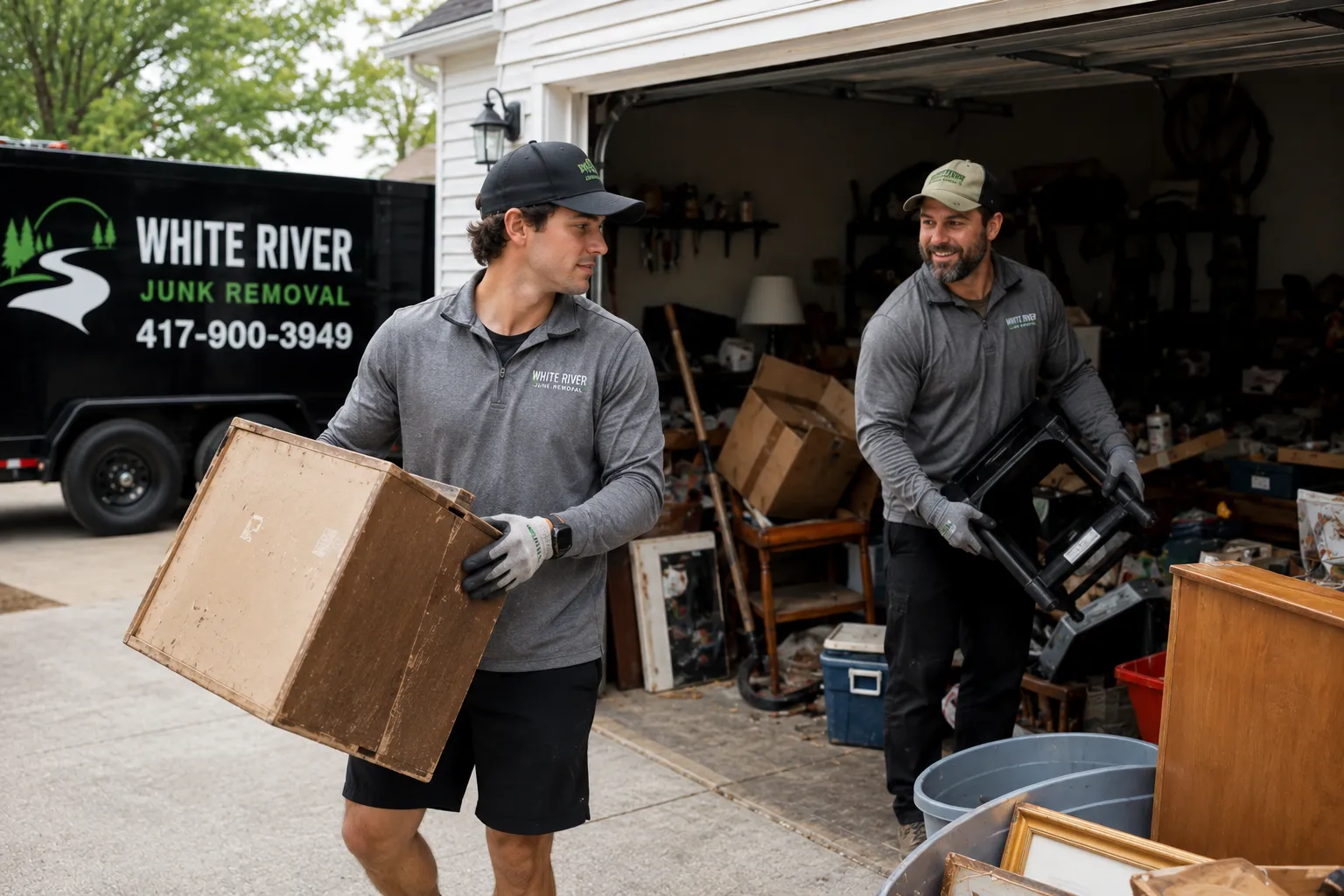
One of the most common questions before scheduling a pickup is simple: "Can you actually take this?" The honest answer is that most junk removal companies, including White River Junk Removal, can handle a wide range of household and light commercial items — but not everything, and a few categories need extra care. Here's a general breakdown to help you plan.
What's typically accepted
Furniture. Couches, mattresses, dressers, tables, chairs, bed frames, bookshelves — the bulky items that are hardest to move alone are usually the most common pickup request. See furniture removal for more detail.
Appliances. Refrigerators, washers, dryers, stoves, dishwashers, water heaters, and window air conditioners are commonly removed, generally with some standard handling for units that use refrigerant. More on that on the appliance removal page.
General household items. Boxes, bins, small electronics, toys, decor, and general clutter that's built up over time.
Yard debris and light demo material. Old fencing, scrap wood, and general yard cleanup debris are usually fine, along with construction and renovation debris like drywall, flooring, and cabinetry — see construction debris removal.
Boxes and totes from moves or storage. Whether they're full or empty, these are a routine part of most cleanouts.
What usually needs a heads-up or special handling
Hazardous materials. Paints, solvents, pesticides, motor oil, and similar chemicals typically can't go through standard junk removal — most areas require these to go through a household hazardous waste program instead. If a garage or shed cleanout includes items like this, it's worth mentioning ahead of time so it's clear what will and won't be included in the pickup.
Certain electronics. Some electronics fall under specific e-waste handling rules depending on local regulations. Standard household electronics are usually fine, but larger quantities or specialized equipment may need to be discussed.
Tires. Tires often require separate handling and disposal fees compared to general junk, so mentioning them up front helps avoid surprises.
Biohazards and severe contamination. Situations involving significant mold, pest infestation, or unsafe material generally call for a specialized remediation service rather than standard junk removal — this comes up occasionally with hoarder house cleanouts or long-vacant properties.
Extremely heavy materials in bulk. Large amounts of concrete, brick, or masonry can be heavier than a standard load is set up to handle efficiently, so bigger quantities are worth flagging.
Why "it depends" is the honest answer
Local regulations around hazardous waste, electronics, and certain other materials vary, and disposal and recycling facility policies can differ too. Rather than publish a fixed list that might be wrong for a specific situation, the more reliable approach is simply to ask. A quick description of anything unusual when you request a quote — "there are also some old paint cans in the garage," for example — means it can be planned for correctly instead of becoming a surprise on pickup day.
A few situations worth planning ahead for
Estate and family cleanouts. These often involve a wide mix of items, some sentimental, some not. It helps to sort through what's being kept before scheduling removal of the rest — see how to prepare for an estate cleanout for more on that process.
Appliances that need disconnecting. Gas, water, and electrical connections generally need to be disconnected before an appliance is removed, unless other arrangements are made ahead of time.
Items you're not sure about. If you're unsure whether something is junk, keep it aside. Nothing gets removed without confirming with you first, so it's easy to point out anything that should stay when the crew arrives.
What happens to items that are still usable
Not everything that leaves a home is destined for a landfill. Furniture, appliances, and household goods that are still in good condition may be candidates for donation rather than disposal — see donation pickups for how that works, and mention it when requesting your quote if reuse matters to you.
Getting a straight answer for your situation
If you have a specific item or situation you're unsure about, the fastest way to get a clear answer is to ask directly. Call (417) 900-3949 or use the quote request form and describe what you have — including anything that might need special handling. That's the most reliable way to know exactly what's included before anyone shows up.