
How to Prepare for an Estate Cleanout
By White River Junk Removal · Published June 8, 2026· 4 min read
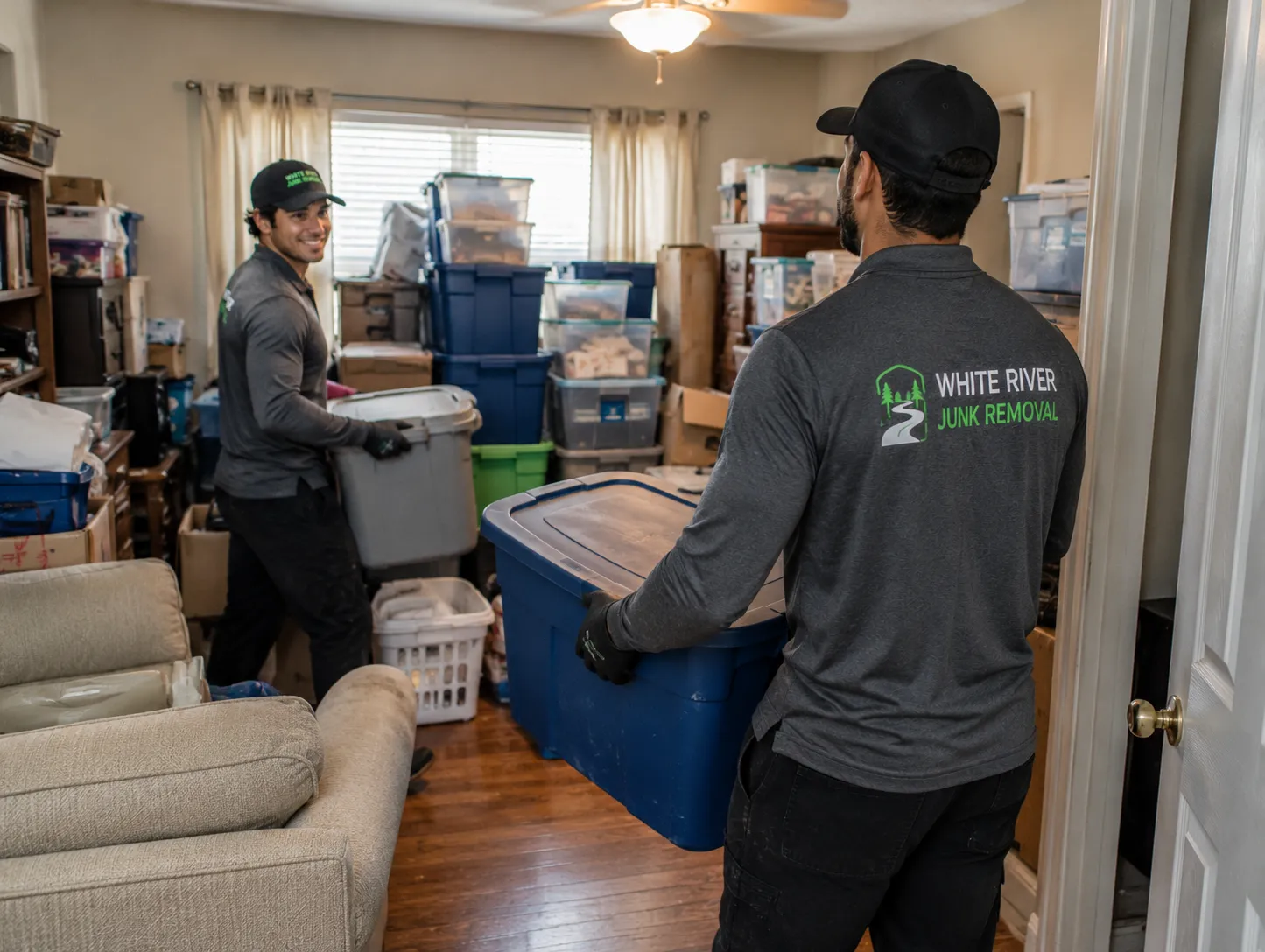
Clearing out a family home — after a loss, or as part of downsizing a parent or relative — is rarely just a logistics project. It's also an emotional one, often happening at the same time as grief, family coordination, and real deadlines tied to a home sale or lease. Having a general plan can make the physical part of the process more manageable, even if the rest of it isn't simple.
This guide walks through a practical approach to preparing for an estate cleanout, from the first walkthrough to the day everything is removed.
Start with keepsakes, not the whole house
It's tempting to think of an estate cleanout as one big task, but it works better broken into stages. The first stage almost always belongs to family: identifying anything with sentimental or financial significance — photos, documents, jewelry, heirlooms, anything anyone in the family wants to keep — before deciding what happens to everything else.
Trying to sort keepsakes and coordinate bulk removal at the same time tends to slow both down. Give the sentimental sorting its own time, even if that means the cleanout happens in more than one visit.
Locate important documents and valuables early
Before anything else leaves the house, it's worth doing a focused pass for:
- Wills, deeds, and legal documents
- Financial records, bank statements, and insurance paperwork
- Jewelry, cash, or small valuables that could be easy to overlook in a drawer or closet
- Keys, including any for safe deposit boxes or storage units
These are the items where a mistake is hardest to undo, so it's worth taking the time to be thorough here specifically, separate from the general sort.
Decide who's making decisions
Estate cleanouts often involve multiple family members, and it helps to be clear early on about who has the authority to make final calls — particularly if it's a formal estate with an executor, or if a power of attorney is involved. Even in informal situations, agreeing on a decision-maker (or a simple process for group decisions) avoids a lot of friction once the sorting actually starts.
Sort what's left into simple categories
Once keepsakes are set aside, most of what remains generally falls into a few categories:
- Donate. Furniture, housewares, and other items in good, usable condition.
- Sell. Items an estate sale company or online marketplace might handle, if that route makes sense for the estate.
- Remove. Everything else — items that are worn out, damaged, or simply not wanted by anyone.
You don't need to sort every single item yourself. Once the keepsakes are out and the general categories are clear, a estate cleanout service can handle physically removing what's left, including coordinating around anything still being sold or donated.
Coordinate timing with any other moving parts
Estate cleanouts are often tied to other deadlines — a home closing, a lease ending, an estate sale date. A few things worth confirming ahead of time:
- Whether an estate sale company needs first access before general removal happens
- Whether a realtor has a specific date the home needs to be show-ready
- Whether any items are going into offsite storage rather than being removed outright (see storage unit cleanouts if a storage unit is part of the picture)
Sharing this timeline when you request a cleanout quote helps make sure the work gets scheduled to actually meet it.
It's okay to do this in phases
Not every estate cleanout needs to happen in one visit, and trying to force it can add unnecessary stress. It's common to clear certain rooms first — ones the family has already finished sorting — while others wait until everyone's had a chance to go through them. A phased approach can also help if the property won't be sold or vacated right away.
What to expect on cleanout day
Once the scope is clear, the physical removal itself is usually the most straightforward part. A crew works room by room, removing what's been designated, and leaves anything that hasn't been decided on. Bigger homes or larger volumes may take more than a single visit or more than one trip with the truck.
When to bring in outside help
There's no single "right" time to call for help — some families handle the entire sort themselves and just need the physical hauling at the end; others want support earlier in the process. A reasonable rule of thumb: once you know generally what's staying with the family and roughly what's left, that's usually a good point to request a quote and get a sense of scheduling and cost for the parts of the job you don't want to handle alone.
Getting started
If you're in the middle of planning an estate cleanout in Springfield or the surrounding area, call (417) 900-3949 or submit a quote request with a general sense of the property size and timeline. From there, the process can be scheduled around what actually works for your family — including in phases, if that's what's needed.